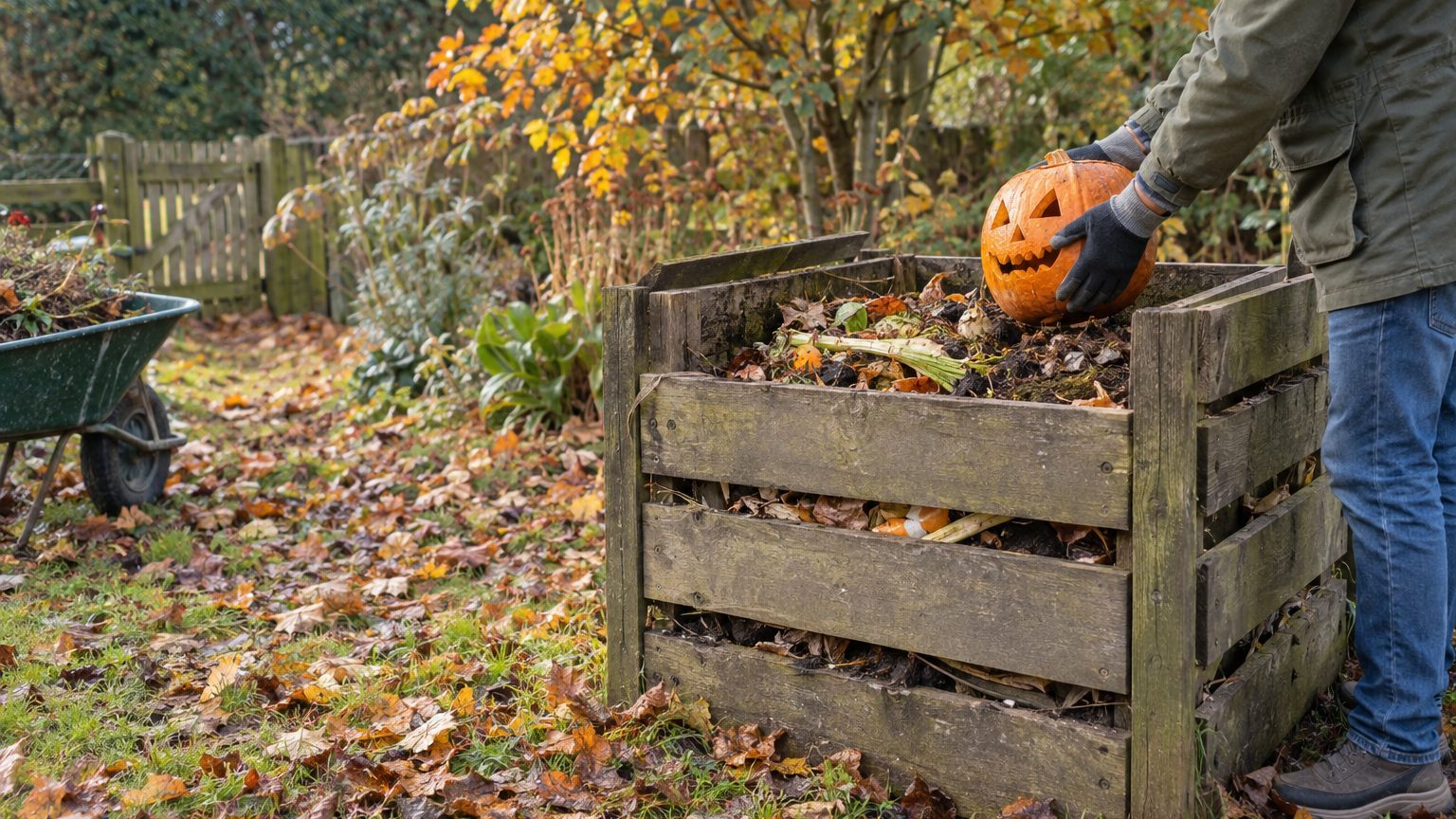
Throw a jack-o’-lantern in the trash and it goes to a landfill. There it rots without oxygen and releases methane, according to Cornell Cooperative Extension. That’s reason enough to look for another route. Several good ones exist, and most take less effort than dragging the pumpkin to the curb.
Condition decides everything.
- Pumpkins rot without oxygen in landfills and release methane.
- Moldy or heavily contaminated pumpkins belong in the compost, not in animal feed.
- Decorated pumpkins must have paint, glitter and wax removed before use.
- Chickens can eat pumpkin flesh, seeds and guts, and they are a simple way to use a whole pumpkin.
Check the pumpkin before you pick a plan
Start with a squeeze and a sniff. An uncarved pumpkin in good shape can be cooked: cut it into small pieces, remove the skin and seeds, and puree the flesh in a food processor. The puree works in pies, breads and soups. A carved one that has gone soft or fuzzy is a different matter, because extension wildlife specialists warn that moldy pumpkins or those with significant bacterial contamination can be dangerous for animals. Those belong in the compost.
Decorations count too. Before a pumpkin goes anywhere, cut off glitter, paint, stickers and candle wax. Skip the bleach rinse some people use to slow rot, since gourds washed with bleach are toxic to farm animals.
The compost pile, or the vegetable bed itself
A pumpkin is close to ninety percent water, and what’s left is soft, sugary material that rots fast. That is exactly what a November pile is missing, since most of what goes in then is dry leaves and spent vines. Break the pumpkin up with a spade so it has more edges, then bury the pieces under a few inches of leaves.
Balance matters, though. Pumpkins and other kitchen scraps are high in nitrogen, so extension guidance says to provide equal or higher amounts of carbon materials such as leaves, sawdust, wood chips or cardboard. Chopping speeds things up considerably. A blemish-free, uncarved pumpkin can sit intact for months, but a jack-o’-lantern starts breaking down as soon as it’s carved. Turn the pile now and then to get air into the middle.
Mold, for once, is welcome.
Those microorganisms aid the composting process, so a pumpkin that has gone fuzzy on the porch can go straight into the bin. If you don’t keep a pile, skip it. Dig a hole in a garden bed, drop the pumpkin in and cover it. The nutrients go back into the same square foot of soil. One catch: seeds buried with the fruit tend to sprout in May, and Cornell suggests removing them first or you’ll have a new pumpkin patch come spring.
No pile and no bed? Look for a pumpkin smash event. Illinois alone grows about 690 million pounds of pumpkins each year, and its extension service points residents to community smashes where pumpkins are composted with a local waste hauler. Don’t leave pumpkins in a ditch or woods. That’s considered littering and can be illegal, and one extension educator reported pumpkins sprouting in forest preserves from the previous year’s dump.
Feeding the flock, the birds and somebody’s pigs
Chickens are the easy audience. They can eat the flesh, seeds, skin and stringy guts, and the guts are often the first part to go. Cut a pumpkin in half and set it in the run cut-side down so they can peck through the skin. One pumpkin can keep a small flock busy for an afternoon. The rules are the same as for compost: fresh, free of mold, and not painted or treated.
You’ll often hear that the seeds deworm chickens. They contain cucurbitacin, but there is little evidence that pumpkin seeds actually prevent parasites, and some sources say flatly that the claim isn’t backed by science.
Treat them as a snack, not medicine.
Wild animals are trickier. Plenty of species will eat pumpkin, but a Texas AgriLife wildlife specialist says a decorated jack-o’-lantern can be a snack, though it’s probably best shared with birds only. Freshness is the condition again. Unsalted baked seeds also work in a bird feeder, and animals tend to go for the fresher pumpkin, so don’t expect the squirrels to rescue a mushy one.
Prefer to hand the problem off? Pumpkins for Pigs keeps a U.S. map of places that accept uncarved, undecorated pumpkins. Some community gardens also accept pumpkins and other food scraps for their compost piles. Call ahead, since most want pumpkins that are whole and clean.
Save the seeds first
Seeds are the part most people throw away, and the part worth keeping. If the pumpkin was an open-pollinated variety you liked, rather than a hybrid, the seeds inside are next year’s patch for free. Rinse off the pulp, spread them on a screen somewhere dry and out of the sun, and give them a couple of weeks before they go into an envelope. A pumpkin that has gone soft usually still has good seed. Seed that sat in warm, wet pulp for a week usually doesn’t.
Whatever route you choose, nothing is wasted. The compost from this year’s pumpkins can go on next year’s crop, which means a jack-o’-lantern that sat on your porch in October could be feeding next summer’s squash vines.
Sources : raising-chickens.org | extension.illinois.edu | beaufort.ces.ncsu.edu